/www.gundp.ch/file/3111/sonRAIL_laermreduktion-planung-messung.png)
/www.gundp.ch/file/3112/sonRAIL_laermreduktion-planung-messung_.png)
From noise at the source to its impact on people
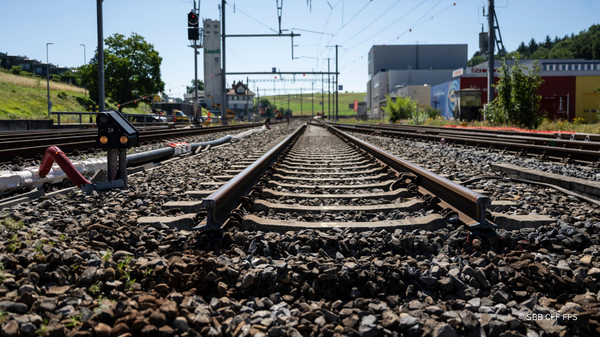
With SonRAIL, the recognised model developed by EMPA, it is possible to calculate how loud trains are at the source. Many factors play a role: train type, rails, sleepers, track geometry or rail roughness. These technical details have a major influence on how accurate and reliable the forecasts are. Even small errors in the initial parameter settings can steer entire projects in the wrong direction.
But even the best emission calculation is only the first step.
What really affects people is not the noise level at the track, but what reaches their homes.
SLIP: Our bridge between technology and everyday life
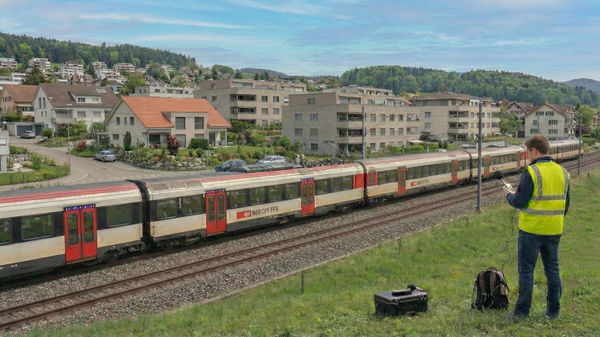
To capture this impact reliably, G+P developed the SLIP model. It calculates how sound propagates across the terrain, along buildings and through built-up areas. Because we designed this tool ourselves, we know every modelling assumption, every limitation and every parameter. This makes the decisive difference between purely theoretical figures and forecasts that are close to reality.
SLIP links the data from SonRAIL with topography and the built environment and translates them into precise immission values. This creates a clear picture of where noise actually arrives, how strongly it is perceived and which noise protection measures are meaningful.
Why this is crucial for projects
Realistic modelling protects against two typical mistakes:
-
Too little protection, which leads to objections, subsequent corrections and legal problems
-
Too much protection, which causes unnecessary costs and puts pressure on visual and spatial integration
With the combination of SonRAIL and SLIP, G+P creates a robust basis for decision-making. We show where noise protection is really needed and dimension measures so that they are effective, economical and well integrated from an architectural point of view.
Legal certainty and trust from the outset
Noise protection is not only a technical issue, but also a legal one. Projects must comply with the limit values of the Noise Abatement Ordinance and pass approval procedures. Our experience from hundreds of projects enables us to identify sensitive zones early and defuse risks proactively.
With sound expert reports and transparent models, we secure procedures and facilitate dialogue with authorities, project stakeholders and the public.
Technology in the service of people
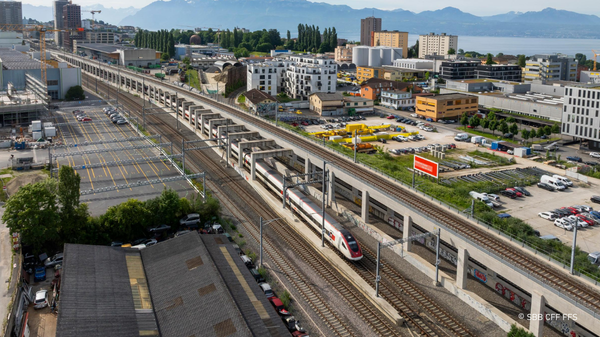
In the end, it is not about software or formulas. It is about quality of life, acceptance of infrastructure and a mobility system that becomes quieter and more compatible with its surroundings. By consistently thinking emissions and immissions together, we help to design railway projects that work and are accepted.
Conclusion
The path from sound emission to effective noise reduction is demanding. G+P brings together technical know-how, its own modelling tools and many years of project experience. With SLIP and SonRAIL, we create reliable decision-making bases that are legally secure, realistic and economical.
We turn complex acoustics into understandable data and data into better projects.
/www.gundp.ch/file/897/01-Gesamtla%CC%88rmmodell-mit-einheitlichem-Datenstand_neu.jpg)
/www.gundp.ch/file/1955/Titelbild_Blogpost_SLIP20_L%C3%A4rmberechnungssoftware_v1.png)
/www.gundp.ch/file/2741/Blog_acoustic-assessment-of-pv-systems-on-motorways.png)